Week 2 Debrief: Your Warmth Audit
You spent all week practicing warmth signals — eye contact, vocal tone, posture, touch calibration. Quick check: do you actually know which ones landed?
Part 1: Week 2 Debrief: Your Warmth Audit — Concept
+5 XP on completion

You spent all week practicing warmth signals — eye contact, vocal tone, posture, touch calibration. Quick check: do you actually know which ones landed?

Here's what nobody admits: warmth isn't what you feel when you're being warm. It's what the other person receives. You can radiate goodwill like a space heater and still read as cold if none of the signals arrive.

Warmth is a set of received signals, not an internal thermostat. Which means it's auditable. You can look at what you installed this week — eye contact, lean, tone, micro-permissions — and ask one brutally useful question: did the other person's behavior change?
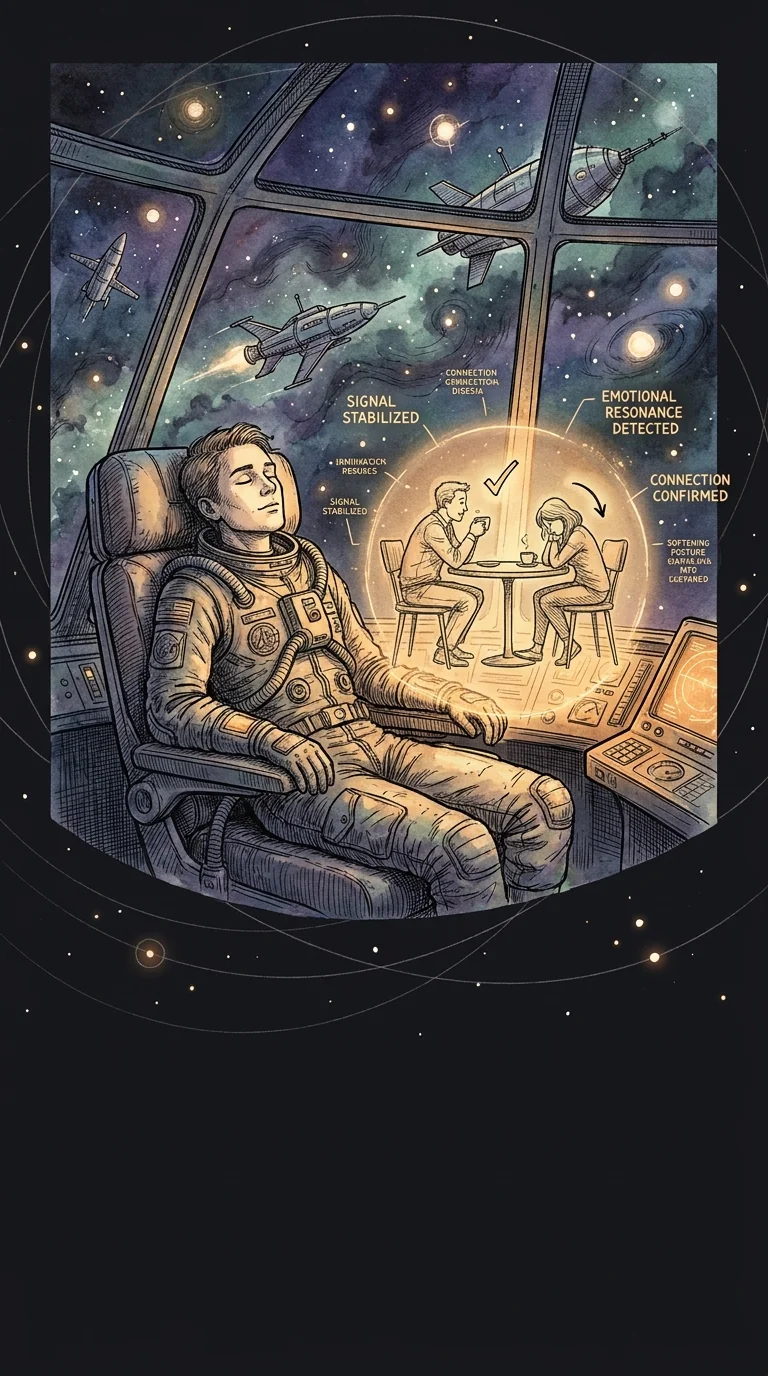
The audit works like this: pick any warmth signal you practiced. Replay the moment. Did the other person relax, open up, lean closer, or share more? If yes, the signal was received. If nothing shifted — you were broadcasting on a frequency they weren't tuned to.

Marcus thought his Week 2 was a success — he'd practiced every signal. Then he ran the audit. His vocal warmth landed almost every time. His eye contact? People kept looking away. Not failure. Data. He knew exactly what to recalibrate.

An audit isn't a grade. It's a diagnostic — the kind that tells you which systems are humming and which need a tuning pass. In Part 2, you'll practice running your own warmth audit on the signals from this week. See you there.
Part 2: Week 2 Debrief: Your Warmth Audit — Practice
+10 XP on completion
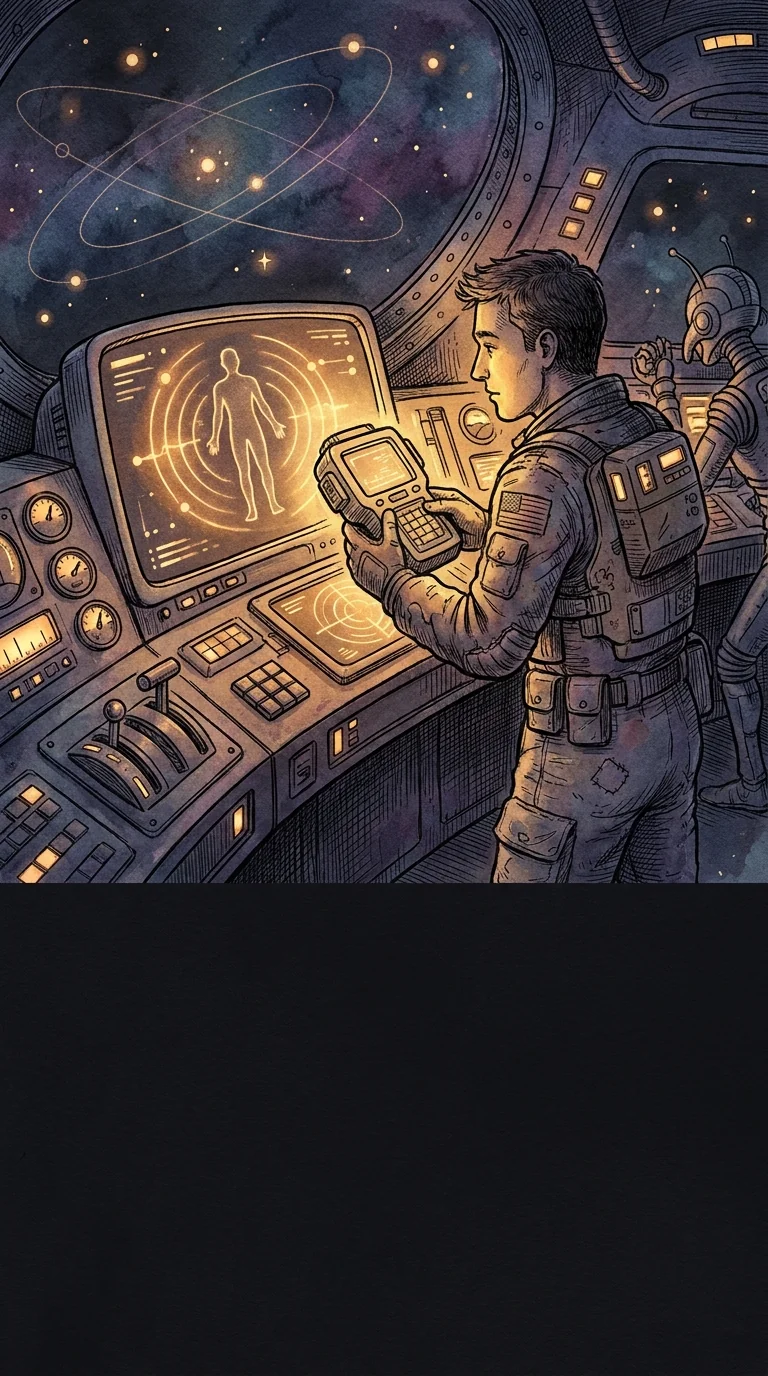
Warmth isn't what you feel — it's what other people receive. So let's find out what you've actually been broadcasting this week.

Most warmth audits go like this: "I'm a warm person, I feel warm feelings, audit complete." That's like checking your ship's radio by thinking really hard about frequencies.

The technique is called the Five-Signal Scan. You review five specific warmth channels — eye contact, vocal tone, open posture, naming, and appropriate touch — and score each one on evidence, not intention.

For each signal, ask one question: "Can I name a specific moment this week when someone visibly responded to this?" No moment, no score. A signal that doesn't land isn't a signal — it's a habit you're performing for yourself.

Lisa ran the scan on a Tuesday night and scored herself a confident four out of five. Then she got honest. Vocal tone? She'd been running on autopilot monotone all week and nobody had warmed to it once. Her real score was two — and that two was something she could actually build on.

Run your own Five-Signal Scan tonight. An honest two beats a fictional five every time — because you can't upgrade a system you haven't actually read.